It is important to realize that grading is the reason you are able to view a level driveway, a flat building foundation, or a parking lot that drains properly after rain. Grading is among the most important processes in excavation and construction. Without grading, the best paved surface or concrete will ultimately fail.
This article outlines what grading is, why grading is so important, and how it also affects the success of any site development project. Grading is also one of the first processes that converts dirt into a safe and usable site.
What Is Grading?
Grading is the process that allows for the slope and elevation of soil or land to be changed prior to the construction process commencing. Grading allows for surfaces to be even, stable and prepared for the construction of roads, buildings and landscaping. Grading allows a contractor to arrive at the proper ground level, getting rid of dips, bumps, or any unstable soil layer. Click this link for more details.
In excavation contracting, grading is the foundation for everything that follows. Whether the job is to install asphalt paving, laying concrete flatwork or trenching to install utilities, grading is the holistic item that will determine longevity.
Students first learning the basics of construction via trading and education will realize quite quickly, that without grading for a construction project a number of deficiencies can occur including water pool, cracking, or instability. Because of this, grading is regarded as equally important as the final paving or building whether structural work.
How Grading Shapes Land
Grading shapes land by removing soil from elevated areas and filling lower areas—making the land level. Grading is a balancing process. Grading prepares land to its finished purpose. For instance, a parking lot needs to be almost flat, but still slightly sloped to allow water to flow away.
These are some common ways grading is used on job sites:
- Threading house foundations so big structures still look level
- Grading roadbeds so they are built to design
- Grading lands for driveways, sidewalks and ramps
- Grading for light slopes for landscape and gardens
Everything being graded means that the land can either be made usable, or having paved surfaces compiled with heavy equipment—pavers and rollers. You can see that grading connects excavation to milliseconds before asphalt or concrete is placed. Sometimes grading provides an aesthetic value to the property by providing flat unbroken transitions and defined areas.
Role in Water Drainage
Grading is one of the most important functions of water control. Bad drainage will destroy asphalt pavements and building foundations. When the rain does not have any options to flow away, it gets into the soil, freezes in the cold climates and cracks asphalt or concrete over time.
Grading directs water away from structures and prevents costly damage. Contractors working on grading and leveling Vacaville projects, for instance, often combine slope adjustments with gutter or trench systems to protect pavement.
Without proper grading, puddles can form and weaken driveways and parking lots. Over time, those areas may need more costly resurfacing or excavation repairs. This is why grading and drainage are important elements in a construction project.
Many engineers consider that grading will provide the cheapest possible insurance against water damage.
Grading Equipment Explained
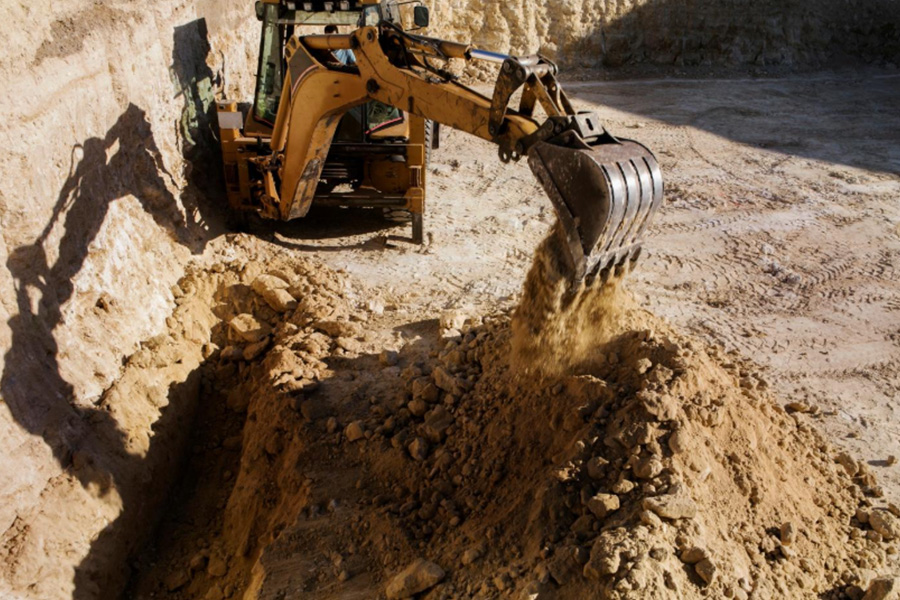
Any time you grade more than just a shovel full of dirt, you are using specialized tools. Contractors have a range of specialized excavation equipment at their disposal to ensure that they are able to shape land to spec.
For small projects, contractors can use compact skid steer loaders to shape land. However, for larger projects, contractors would need the combined efforts of bulldozers, motor graders, excavators, and sometimes even laser systems.
Examples of equipment frequently used in grading:
- Bulldozers, for moving soil in mass against gravity
- Motor graders, for slopes and finished surfaces
- Excavators, to deal with voids, or irregular surfaces
- Compactors, for further stabilizing soil after grading action
Grading has begun to take advantage of GPS systems and laser levels, which allow the precision of grading to within just a few fractions of inches. With GPS and laser levels, contractors are able to reduce mistakes, which allows contractors to produce high-quality results that stand the test of time for asphalt pavements and site development.
With improved equipment precision, much of grading can be completed faster, with less material wasted, which indirectly contributes to the project’s limited budget.
Slope Stability Basics
Slope stability is the science sufficiently ensuring that the soil stays put after excavation work; sometimes without grading, very much like a house built on sand, a slope may be solid but with enough water it can shift, move, erode and/or very well collapse.
Check this link https://www.sciencedirect.com/topics/physics-and-astronomy/slope-stability for additional information.
Contractors will consider soil types, moisture conditions and the angle of incline, each contractor is making decisions on what type of shape they will create land.
Land shaping balances many conditions. For example, clay soil retains water, and can quickly become slippery, while sandy soil can have varying rates of erosion and sliding without reinforcement. Grading works to create a “shape”, where the angles work to limit the sliding.
In construction, it can be routine to use safe slopes to protect what did not slide—the foundation or the road and/or retaining wall that failed because downstream materials slid downhill.
Beyond technical safety, slope stability is important to ensure characteristics for landscaping, driveways, or finished paved surfaces remain attractive and functional, making grading one of the most important processes when it comes to excavation contracting services.
For students, learning these bases adds an understanding of how safety, durability, and design can overlap in real-life projects.
Conclusion
Grading may not be visible once the project is complete, but it is present during each successful development. Grading works to shape land, direct water, and assure stability—ultimately providing a support for durable roads, driveways, and structures.
For students and DIY learners, learning about grading offers an insight into the belief and trust professionals are correct when they imply excavation services continue to be required services today. Grading also allows an insight into planning that occurs before loads of asphalt or concrete ever reach the ground.